
Fire in s'Albufera: Arrest in sa Pobla raises questions
Fire in s'Albufera: Arrest in sa Pobla raises questions
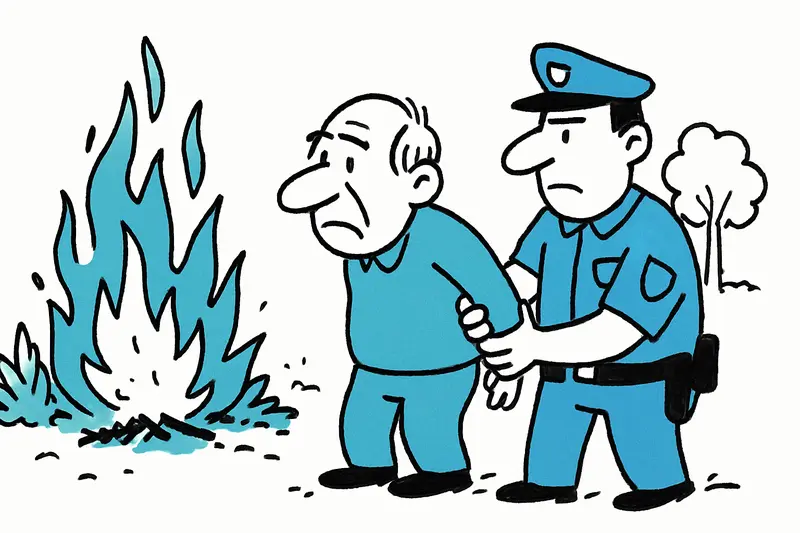
The arrest of a 72-year-old man from sa Pobla, whom investigators say started numerous fires in the s'Albufera natural park, shows that small fires are as dangerous to the reserve as large ones — and are often harder to prevent.
Fire in s'Albufera: Arrest in sa Pobla raises questions
Key question: How do we protect the sensitive wetlands when fires don't always start big — but from next door?
On February 10 the Guardia Civil stepped in: a 72-year-old man from sa Pobla was arrested after witnesses spotted him and identified him in a photograph. Investigators hold him responsible for numerous fires in the s'Albufera Natural Park in recent years, which included incidents described in Wildfire in s'Albufera: Six Fires Quickly Extinguished — but Questions Remain. After his arrest the man said he had "cleaned" areas of dry vegetation. A judge has since banned him from approaching the area.
That is the sober set of facts. But anyone standing on the park's shoreline sees more: walkers with dogs on the Camí, birdwatchers with binoculars, the smell of salt and mud, and in February the biting north wind that flattens the grass and can carry sparks within minutes. A small fire at a bend in a path can spread quickly during dry spells — precisely where reeds, dry stalks and wind meet.
Critical analysis: the arrest answers a question of responsibility, but it does not illuminate the system's weaknesses. Individual perpetrators are prosecuted — rightly so — but a nature reserve needs more than law enforcement. s'Albufera is a wetland of high ecological value: a stopover for migratory birds, a habitat for rare species, a sponge against floods. Recurrent small fires erode the ecosystem slowly; the cumulative effect is greater than the headline about a single case.
What is missing from public debate: first, recognition that "small fires" are not a trivial problem. Second, a discussion about preventive land management: who removes dry material, how is it authorized, and what alternative methods exist to so‑called "cleaning"? Third: an honest debate about resources for monitoring and rapid response — both personnel and technology.
A scene from everyday life: it is early morning, the wind whistles over the fields near sa Pobla, an old farmer drives by, chickens cluck in a yard. Two families get out at the park entrance parking lot, speaking quietly about birdwatching. In the distance a column of smoke appears and quickly becomes a cause for concern. Bystanders grab their phones and call — it was precisely this quick observation that proved decisive for the arrest, as recounted in Fire in s'Albufera near Alcúdia: Who saw the white car?. Such moments show how citizen involvement and local vigilance can work.
Concrete solutions: 1) Increased presence during windy periods: targeted patrols by the Guardia Civil combined with park wardens, especially at known hot spots. 2) Preventive landscape management by the responsible authority — not by residents on their own. Authorized scrub clearance, removal of deadwood in defined corridors, carried out under technical supervision. 3) Early warning systems: thermal cameras at elevated points, simple reporting apps for residents and visitors linked to the emergency control center. 4) Awareness campaigns: why "cleaning" by burning is dangerous, what alternatives exist, explained concretely and locally (on park signs, in municipal bulletins, in schools). 5) Clear sanctions and precedents: judicial bans like the current one are necessary but should be accompanied by fines and restoration orders for damaged areas.
Additionally: integrate weather data. When AEMET reports strong winds or dry periods, park management must translate those warnings into operational plans — temporary access restrictions, additional checks, intensified outreach.
One further detail: most fires do not start in deep forests but in edge zones — on farm tracks, at the transition from agriculture to protected land, where private practice meets public responsibility, a pattern highlighted in Nighttime Fires in S'Albufera: Six Ignition Points — How Do We Protect the Wetland?. This requires clear responsibilities between municipalities, farmers, the Consell and park management. Who does what, and who pays for it?
Concluding point: the arrest of a man from sa Pobla is a partial success — it shows that witnesses, photographic evidence and the police can work together. But it does not replace a coordinated, preventive protection plan for s'Albufera. To preserve the wetlands, prosecution must be paired with better maintenance, monitoring and information. Otherwise a natural treasure will be left with burn scars and well‑meaning judgments.
On Mallorca we are close to what happens: you can hear the sea, see the wind dancing over the fields and know that one spark is enough. It is time for authorities, municipalities and local people to act not only reactively, but proactively.
Read, researched, and newly interpreted for you: Source
Similar News

Four Seasons docks in Palma: luxury yacht, private jet and the question of benefit for the island
With the 95-suite yacht “Four Seasons I” and a private A321 as a world-travel machine, luxury travel is moving to Palma....

New vacation photos: Royal family in Mallorca — train ride to Sóller and visit to Esporles
The Royal Household has released previously unpublished family photos from the summers of 2012 and 2013 — intimate snaps...

Burger Week and Restaurant Week: How February Comes to Life on Mallorca
Sixteen venues compete for bites and likes: the Fan Burger Week (Feb 16–22) entices with special offers and a raffle to ...
Cause inflammation on contact: How dangerous are the processionary caterpillars in Mallorca — and what needs to change now?
The caterpillars of the processionary moth are currently causing trouble in pine forests and parks. Authorities are remo...
Teenager seriously injured on Ma-2110: Why this night road needs more protection
A 17-year-old was seriously injured on the Ma-2110 between Inca and Lloseta. A night road, lack of visibility and missin...
More to explore
Discover more interesting content

Experience Mallorca's Best Beaches and Coves with SUP and Snorkeling

Spanish Cooking Workshop in Mallorca
