
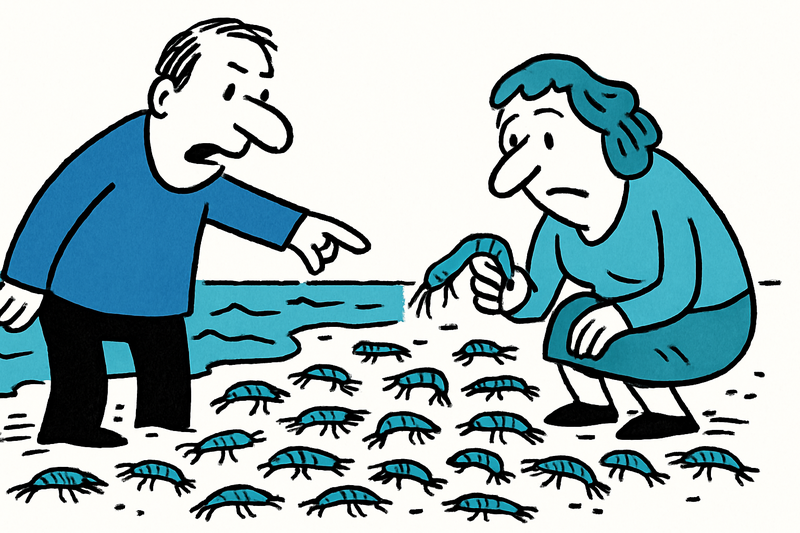
Alfombra roja en el muelle: por qué los hallazgos de kril en la costa norte de Mallorca son una señal de alarma
En los muelles de Port de Pollença y Alcúdia yacían partículas rojas de kril como una alfombra. Lo que al principio parece curioso podría ser una señal temprana de problemas marinos más profundos. Un llamado a favor de más mediciones, canales de notificación y cooperación local.
Alfombra roja en el muelle: por qué los hallazgos de kril en la costa norte de Mallorca son una señal de alarma
Una helada mañana de febrero en el espigón de Port de Pollença: olor a diésel sobre los cascos, termos que humear en el aire frío, gaviotas que graznan y boyas que golpean los amarraderos. En el empedrado húmedo hay una alfombra roja: pequeños kriles tan densos que la superficie parece espolvoreada. Semanas después la misma escena en Alcúdia: una camarera se queda parada con las bandejas en el umbral, jubilados en la plaza susurran, un pescador con los dedos manchados de aceite recoge un puñado. Para turistas, una curiosidad fotográfica; para investigadoras e investigadores, un posible aviso.
Pregunta central
¿Es esta mortalidad local masiva de kril solo un capricho pasajero del mar, o la señal temprana de un desplazamiento ecológico mayor en el Mediterráneo occidental que pronto tendrá efectos económicos también en tierra?
Análisis crítico
Un solo hallazgo no es motivo ni de pánico ni de indiferencia. Pero el kril y otros zooplancton forman los cimientos de la red trófica marina: consumen fitoplancton, alimentan a peces pequeños y de ahí a gaviotas, calamares y a las capturas en nuestros espigones. Si esa base se tambalea, los primeros en notarlo serán quienes viven del mar: pescadores, propietarios de restaurantes, trabajadores portuarios. Para más información sobre los efectos en la pesca, puedes leer este artículo.
Los análisis de laboratorio no han mostrado hasta ahora indicios claros de una enfermedad epidémica. Más plausibles parecen causas físicas: agujeros temporales de oxígeno, cambios repentinos en las corrientes, mezcla de capas de agua o entradas puntuales de contaminantes que llevan a los bancos a la superficie y los matan. Esos procesos son difíciles de reconstruir si a lo largo de la costa casi no hay estaciones de medición, como se discute en este análisis.
Aquí radica el problema metodológico: en la costa norte faltan puntos de muestreo regulares y recuentos continuos de plancton. Lo que vemos son instantáneas — imágenes agradables o inquietantes, pero no análisis de tendencias. Sin datos permanentes sobre perfiles de temperatura, oxígeno disuelto, corrientes y clorofila, queda abierto si se trata de fluctuaciones naturales o del inicio de una tendencia.
Lo que falta en el debate público
En la Plaça de Pollença las discusiones se dominan pronto por aparcamientos, normas de sombrillas y horarios de apertura. Los procesos submarinos rara vez salen a la palestra. La conexión entre las bolitas rojas en el muelle y posibles consecuencias — menos alevines, cambios en las avistamientos de delfines o descenso de aves — no se establece. Faltan vías sencillas para notificar a trabajadores portuarios y pescadores recreativos, paneles informativos en los espigones y una coordinación local que reúna a pescadores, autoridades e investigación.
Cinco pasos pragmáticos que deberíamos implementar de inmediato
Primero, una red local de observadores costeros: puertos, voluntariado, clubes de buceo y clases escolares que recojan semanalmente muestras con redes de plancton sencillas siguiendo un protocolo común. Un disco de Secchi y mediciones de temperatura son suficientes para empezar.
Segundo, una plataforma de notificación de fácil acceso: una línea telefónica combinada con un formulario online breve y avisos estandarizados de hallazgos de ejemplares muertos. Trabajadores portuarios, pescadores y residentes deben poder informar sucesos llamativos sin complicaciones.
Terceiro, boyas de medición móviles y algunos sensores fijos a lo largo de la costa norte que registren temperatura, oxígeno disuelto, salinidad y corrientes casi en tiempo real. Alarmas automáticas por desviaciones podrían avisar de inmediato a investigadores y autoridades portuarias, como se menciona en este informe.
Cuarto, cooperaciones formales entre la universidad, el Consell de Mallorca, asociaciones pesqueras y las autoridades portuarias: compartir datos, analizarlos con rapidez y comunicarlos de forma comprensible localmente — sin interminables informes técnicos.
Quinto, actividades educativas: talleres breves en escuelas, paneles informativos en los espigones y reuniones periódicas con pescadores. El plancton no puede seguir siendo “cosa pequeña”; debe formar parte del conocimiento cotidiano.
Oportunidades en lugar de pesimismo
De una observación inquietante puede surgir algo positivo. Proyectos de ciencia ciudadana pueden unir a pescadores profesionales, alumnos y científicos. Las boyas hacen visible el mar — niños que conectan una sonda aprenden más sobre corrientes que con cualquier clase magistral. Mejores datos permiten cuotas de pesca más inteligentes, áreas protegidas más focalizadas y mayor resiliencia para la economía costera. Quien invierta ahora en vigilancia y educación protege a medio plazo empleos en la hostelería y la pesca y aquello que valoran los visitantes: costas vivas con redes llenas y gaviotas planeando.
Una imagen cotidiana como espejo
Imagine la Carrer de la Mar: niños corren descalzos, una camarera equilibra platos entre sombrillas, un pescador remienda su red. La mayoría no relaciona eso con procesos invisibles bajo el agua — hasta que las redes estén más vacías o las gaviotas sean menos frecuentes. Los hallazgos de ejemplares muertos en el muelle suelen ser la única advertencia visible: las causas están en corrientes, campos de temperatura o reacciones químicas — cosas que no vemos si nadie mide.
Conclusión
Las bolitas rojas en el muelle no son un bonito souvenir para el teléfono, sino una llamada de atención. Lo crucial es no limitarse a comentar el episodio en los medios, sino reaccionar estructuralmente: mejor vigilancia, canales de notificación sencillos, más puntos de medición y cooperación real entre administraciones, investigación y comunidades costeras. Si no hacemos nada, corremos el riesgo de pasar por alto la próxima señal — y solo darnos cuenta cuando las consecuencias sean visibles en tierra: redes vacías, menos aves y playas cambiadas.
Noticias similares

Inicio de temporada en la Playa: por qué la apertura de las semanas del Bierkönig hace la vida en Palma más colorida
Del 16 al 19 de abril comienza la apertura en el Bierkönig en la Playa de Palma. Nuevos éxitos de fiesta, un cambio de c...

Carme Serna: la risa que cura — en las plantas hospitalarias de Mallorca
Como Valentina Ventolina, Carme Serna recorre las habitaciones de los hospitales de las Baleares. Un retrato sobre el tr...
Caída en Sa Calobra: ¿Quién paga el precio por el peligroso descenso de Mallorca?
Una ciclista se cayó en la sinuosa bajada hacia Sa Calobra. ¿Quién asume la responsabilidad por la seguridad en este tra...
En 12 minutos al aeropuerto: ¿pero a qué precio? Un análisis realista del nuevo tranvía
El gobierno de las Baleares ha aprobado la construcción del nuevo tranvía Palma–Llucmajor: 30 km, 13 paradas, 12 minutos...
Huelga de pilotos afecta a los viajeros a Mallorca: ¿Quién paga el día de vacaciones perdido?
Eurowings y Lufthansa vuelven a paralizar salidas desde Alemania. Un análisis crítico para los viajeros a Mallorca, esce...
Más para descubrir
Descubre más contenido interesante

Descubre las mejores playas y calas de Mallorca con SUP y esnórquel

Taller de cocina española en Mallorca
