
Why Calçats Alba Is Closing — and What Palma Is Losing
Why Calçats Alba Is Closing — and What Palma Is Losing
Calçats Alba on the Plaça de la Mare de Déu de la Salut is ending sales after more than 70 years. A local tour, a critical question and concrete proposals for how Palma's retail structure can be saved.
Why Calçats Alba Is Closing — and What Palma Is Losing
A traditional shop on the Plaça de la Mare de Déu de la Salut closes after more than seven decades — and nobody has an easy answer
Next Saturday the doors of Calçats Alba will open for the last time. Large notices on the shop window read "Total clearance, shoes for €29 and €39." Walking along the Plaça de la Mare de Déu de la Salut you can hear the bells of Sant Miquel, the rattle of a delivery crate and the conversation of two elderly neighbours wondering whether they will recognise the street in ten years' time. This is the scene: a piece of commerce that is slowly going quiet.
Key question: Why are traditional shops like Calçats Alba disappearing from Palma's city centre — and what does this mean for everyday life here?
A sober inventory: the shop has existed for more than seventy years, the owner has not spoken publicly about the closure according to neighbours, and the neighbouring business remains open because its operator wants to keep it running. From the once-dense network of traders along the pedestrian zone only a few remain, a trend documented in When the Shop Windows Fall Silent: Small Shops in Mallorca Feel the Pressure in Summer 2025.
The criticism is obvious. Rents are rising, property owners prioritise short-term returns, online retail eats into passing trade, and young sales staff often find better conditions in other sectors or outside the city. At first glance these causes are not surprising. Looking more closely, however, there is often no system for succession, insufficient measures to stabilise fixed shop rents and too little transparency in commercial contracts. Someone who inherits a shop needs planning support, advice and financial incentives, not just good intentions.
What is too rarely mentioned in the citywide discussion is the social aspect. A shoe shop is more than shoes. It is a meeting place, a landmark for seniors, a workplace for apprentices and a noticeboard for neighbourhood announcements. When such places disappear, the daily infrastructure shrinks. In the afternoons fewer people sit in front of the café, the bakery receives fewer regular bread orders, and the square feels emptier — especially in winter when tourism does not fill the streets.
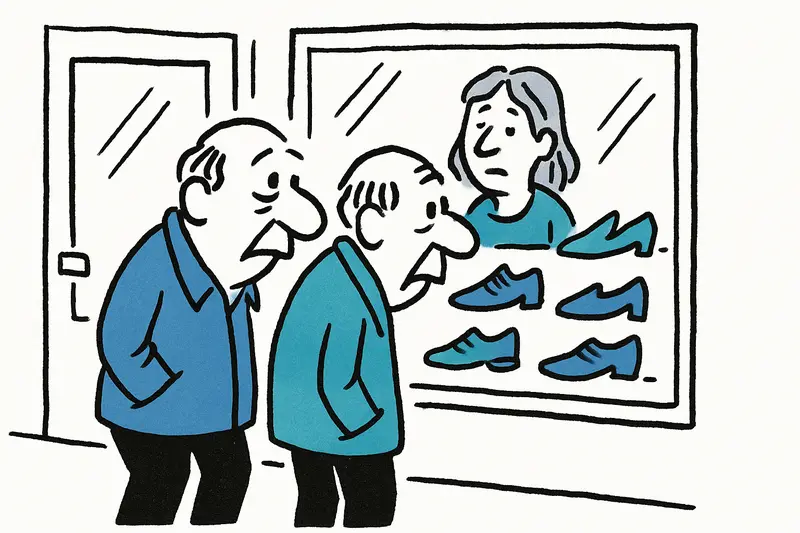
An everyday scene: it is early morning, the street sweepers are working, a delivery van stops on Carrer Sant Miquel, and two retirees pause in front of Calçats Alba's window. They talk about the past — shoe sizes, the woman who always knew exactly which pair would fit. They tuck their hands into their pockets and walk on. Memory places disappear bit by bit this way.
Concrete proposals that should be discussed: first, a municipal register for "local commercial assets," a list of shops with cultural significance that would receive tax relief on ownership transfer. Second, temporary rent brakes for core zones: not blanket price controls, but mechanisms to prevent sudden doublings. Third, city subsidies for succession programmes: advisory networks, legal advice for commercial lease contracts and start-up grants for new operators. Fourth, a lively mix of uses instead of pure boutique transformations: support programmes for crafts, repair services and traditional retailers that animate neighbourhoods day by day. These ideas intersect with ongoing discussions about market halls in the city, for example Palma re-tenders the Mercat de Llevant – Can the supermarket become a true market hall again?.
There is no patent remedy. But there are simple measures that could help immediately: information evenings for shop owners, a city hotline for lease questions, partnerships with banks for small bridging loans and targeted initiatives so that young entrepreneurs can test spaces under moderate conditions. Six-month pop-up support programmes, for example, prevent long-term vacancies and protect new business owners from ruinous starter rents.
What we as buyers can do is banal and effective: shop locally more often, not only out of nostalgia but because every euro spent in the neighbourhood matters — for wages, for tradespeople, for the street cafés. Municipalities can support this with temporary parking zones for customers, clearer information about local offers in tourist centres and weekly markets that bring regular customers into the streets.
The closure of Calçats Alba is not an isolated incident but part of a broader trend. Individual shop owners' decisions are personal and often understandable — but they are also political, because urban planning, land policy and economic promotion set the framework. If Palma's centre becomes a showcase for expensive concepts, the city loses its everyday quality; large-scale renovations and construction projects also reshape neighbourhood life, as noted in Plaça Mercat: 20 Months of Construction — Renovation Under Review.
Conclusion: complaining about the disappearance is not enough. We need honest figures on commercial tenancies, concrete instruments for succession and better coordination between the city administration, property owners and traders. Otherwise the farewell to Calçats Alba will become a normality nobody wanted — except those who see empty premises as a lucrative speculation opportunity.
Read, researched, and newly interpreted for you: Source
Similar News

Who pays when a superyacht strands in a storm? A reality check on the Acoa in Son Servera
During hurricane-like weather the 28-meter yacht “Acoa” became stranded on Playa de Sa Marjal. A lone German skipper on ...
Short trip to Paris: Why Mallorcans should give the Seine a chance
Two hours by plane, different air, far too many croissants — and yet: Paris is more than a cliché. A suggestion for a we...
What to do when your flight causes trouble? A reality check for Mallorca travelers
Flight cancelled, stuck for hours at the airport — what passengers are entitled to and how to enforce claims in Mallorca...

Pub stages awaken: 'Teatre de Barra' starts a new edition in Palma
Short plays in bars on Calle Blanquerna: the popular pub theatre returns with the theme of tourism — five evenings in Fe...

Palma invests at Bellver: Much money, open questions
The city of Palma plans a €3.18 million project around the Castillo de Bellver. Two million euros come from the tourism ...
More to explore
Discover more interesting content

Experience Mallorca's Best Beaches and Coves with SUP and Snorkeling

Spanish Cooking Workshop in Mallorca
