
What to do when your flight causes trouble? A reality check for Mallorca travelers
What to do when your flight causes trouble? A reality check for Mallorca travelers
Flight cancelled, stuck for hours at the airport — what passengers are entitled to and how to enforce claims in Mallorca. Practical steps and local tips.
What to do when your flight causes trouble? A reality check for Mallorca travelers
Key question: Are EU passenger rights really enough — and how do I enforce them in Mallorca?
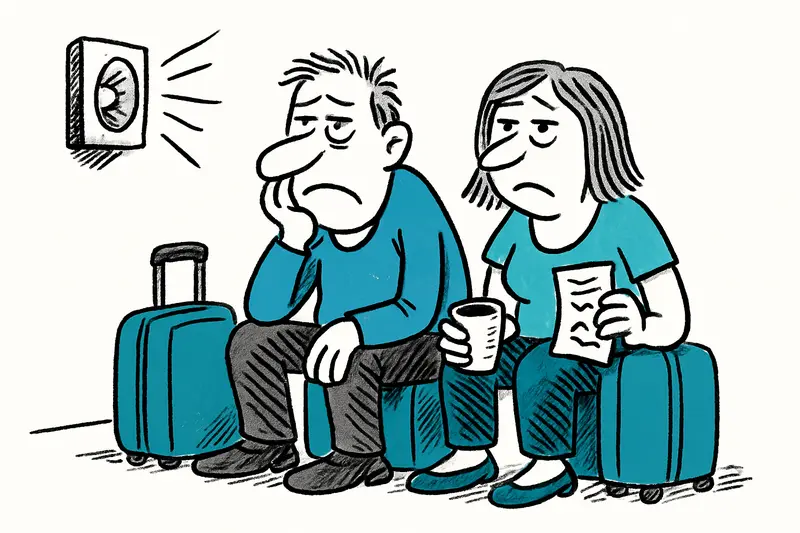
At Son Sant Joan a couple sits on their suitcases. An announcement echoes from the loudspeaker that neither of them really understands. In front of them: long faces, a half-empty coffee from the airport bistro and an illegible note with a new departure time. You see this scene here more often than you might think; our report on Seven hours of waiting at BER describes similar scenes: holidaymakers packing, business travelers with laptops under their arms, taxi drivers honking as they pull away from the terminal queue. The question is: what can you actually do in such a moment?
The answer is in the EU Regulation on air passenger rights (EC) No 261/2004. It provides fixed rules in the event of delay, cancellation or denied boarding — for example, on-site assistance (meals, phone calls), hotel accommodation if an overnight stay is necessary, and compensation of €250, €400 or €600 depending on the distance if arrival at the final destination is significantly delayed. But the good news doesn’t end there: practice is more complicated than the rules suggest.
Critical analysis: On paper the rights are clear, but in reality things grind. Airlines like to shift responsibility, claim "extraordinary circumstances" or fail to respond at all, as happened during a jet fuel shortage in Hamburg. Passengers are often left confused because they don’t receive written confirmation, discard receipts or simply don’t know which steps are sensible. On Mallorca this is exacerbated because many travelers only stay briefly and do not follow up after returning home.
What is missing from the public discussion: sober practical instructions and local contact points. It is rarely explained which documents are essential, how to formulate a formal complaint to the airline or how to involve the national enforcement body. The discussion often ends with a mere mention of euro amounts, without guidance on the concrete process.
Concrete, immediately actionable steps for Mallorca travelers: First: document everything. Keep boarding passes, booking confirmation emails, photos of the departure board, time stamps on phone photos and receipts for meals. Second: request a written statement from the airline at the airport — a short record helps enormously later. Third: note names of staff members or make a short voice recording (with notice that you are recording), if possible.
Fourth: submit a formal complaint to the airline and attach all receipts. State a clear claim (refund, replacement transport/flight, compensation). Fifth: if the airline remains inactive, contact the national enforcement body. In Spain this is AESA; it accepts complaints about passenger rights. In addition, the EU Online Dispute Resolution (ODR) platform is available as another channel.
Practical tip from the field: note your hotel’s local address and a phone number in Mallorca before you head to the airport. Many cases arise because customers lose receipts while traveling or later no longer remember where they stayed. If you’re still sitting in Palma at Passeig des Born and annoyed, you can go back to the hotel the same evening and secure copies — it costs little time but greatly increases your chances of success.
Paid claim services are plentiful. They can be useful if you don’t have time to pursue the case yourself. Consider their fee structure, though: these providers often keep a portion of the compensation. For smaller amounts that may not be worthwhile.
Missing element: more service at the airport. Airlines and airport operators should have clearer information points that immediately inform passengers about their rights and the next steps — in multiple languages. Until that happens, local initiatives help: consumer centers, notices in hostels and information at taxi stands would ease many situations.
Concrete proposals for authorities and businesses in Mallorca: clearly visible info stations at central terminal points with step-by-step instructions, free forms in Spanish/English/Catalan/German and trained contacts who can handle simple cases directly. For travelers: document early, keep receipts and insist on written confirmation from the airline immediately.
Conclusion: The rights exist, but they only help if you activate them. Those who act quickly in Mallorca, collect evidence and know whom to contact (airline first, then AESA, ODR or a consumer center) have a good chance. And next time you’re standing in the terminal: breathe, document, ask loudly — that helps more than waiting in silence.
Read, researched, and newly interpreted for you: Source
Similar News
Why Calçats Alba Is Closing — and What Palma Is Losing
Calçats Alba on the Plaça de la Mare de Déu de la Salut is ending sales after more than 70 years. A local tour, a critic...
Who pays when a superyacht strands in a storm? A reality check on the Acoa in Son Servera
During hurricane-like weather the 28-meter yacht “Acoa” became stranded on Playa de Sa Marjal. A lone German skipper on ...

Short trip to Paris: Why Mallorcans should give the Seine a chance
Two hours by plane, different air, far too many croissants — and yet: Paris is more than a cliché. A suggestion for a we...

Pub stages awaken: 'Teatre de Barra' starts a new edition in Palma
Short plays in bars on Calle Blanquerna: the popular pub theatre returns with the theme of tourism — five evenings in Fe...

Palma invests at Bellver: Much money, open questions
The city of Palma plans a €3.18 million project around the Castillo de Bellver. Two million euros come from the tourism ...
More to explore
Discover more interesting content

Experience Mallorca's Best Beaches and Coves with SUP and Snorkeling

Spanish Cooking Workshop in Mallorca
